

Fishing port of Union Hall

Date of visit: 30/09/2024
General information
Port authority: Keelbeg Pier
Administrator: Cork County Council
Port description:

This is small fishing pier with 19 regular boats from 6m to 28m, including 1 x Demersal trawler (Prawns), 2 x Pelagic vessels and Inshore fishing boats.
There is also a RNLI station and a Rowing Club attached to the pier.

Management of used fishing gear

Equipment

A Forklift and a sweeper are available on site.

Management

Currently EOL goes to landfill, reusable/ recyclable components such as metal are stripped beforehand.
Segregated Waste includes:
• Hazardous/ Oils – liquids/ solids/ rags/
• Oil drums go to Germany and are converted to heating material.
• Waste Metal
• General
• Wood (mostly Pallets/ cable reel)

Reuse

• There is a new Port Reception Facility.
• However due to a lack of staffing resources fishermen deliver waste to the unmanned reception.
• This results in waste receptacles becoming mixed.

Passive fishing for litter

Current pratices

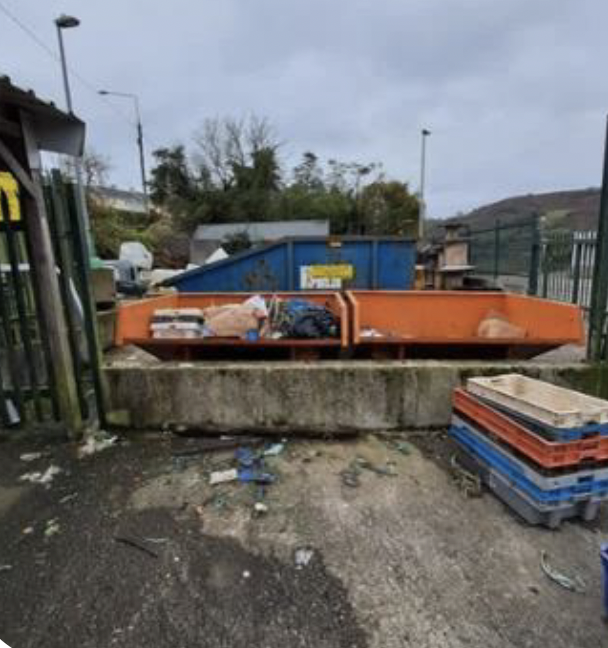
• The port is named as a ‘Fishing for Litter’ port. • Fishing for Litter tonne bags, supplied by BIM are used by 2 boats frequenting the pier. • There is a small orange skip is available for FfL, however, as it is an open PRF, other items usually end up in it.

Constraints and bests practices

Constraints

• No waste management plan – A plan is currently being developed.
• Due to lack of staff – fishermen deliver waste to the unmanned port reception, resulting in a mismanaged waste system.
• No value chain available for nets.

Bests practices et objectives

• There is a net storage/ maintenance area for nets in use.
• There is ample room on the pier for segregation of waste.
Objectives
The separation of waste on site, and the overall management of due to lack of funding and resources. As the PRF is open, the implementation of incentives/enforcement is need to ensure waste ends up in the correct bins.

Other technical data sheets
Filters
Reset
information sheet

Fishing port of A Coruña

Multiple port activities, highlighting liquid and solid bulk traffic, as well as general cargo. Fishing is the main pillar of the port and has a fish market.
Fishing practice: 94 vessels (mostly small-scale), but the number rises to 190 when including boats that unload at the fish market but are not based at the port.
Landings: Poor cod, horse mackerel, mackerel, sardine, common bream, European anchovy, starling, hake, whiting, sole, megrim, skate, dogfish, black scorpionfish, monkfish, John Dory, red mullet, rockling, pollock, pipefish…

Read more
information sheet

Fishing port of Audierne

Fishing port and marina
Presence of a fish market, online sales only Flotilla of 30 vessels (gillnetter and trollers)

Read more
information sheet

Fishing port of Granville

Fishing port, commercial port and marina. Presence of a fish market Flotilla of 55 fishing vessels :
mainly dredgers & caseyeur (pot vessels)

Read more
information sheet

Fishing port of Vigo

General cargo, bulk solids, ship service, fishing activity (fresh and frozen), fish market.
Fishing practice: fleet of 359 vessels and ships (mostly artisanal vessels)
Landings: Black monkfish, White monkfish, Blue shark, Swordfish, Northern megrim, Atlantic pomfret, European hake, Korean flounder, Common squid, Horse mackerel…

Read more
information sheet

Fishing port of Kilmore Quay

This is a multi-purpose port which accommodates approx.
20 trawlers, 5 scallop boats and 25 inshore vessels for crab, lobster & whelk. In addition, charter deep-sea angling vessels, tourboats to the Saltee Islands, and leisure crafts use the port.
There are also seafood processing plants next to the port.

Read more
information sheet

Fishing port of Castletownbere

A busy port that is home to several state organisations and fishing businesses. Including a seafood processing plant, an ice plant, fisherman’s co-op, and shipping agents. Cruise liners and island ferries also dock here.
30 x >20m fishing vessels are based at the port, the majority are whitefish trawlers.

Read more